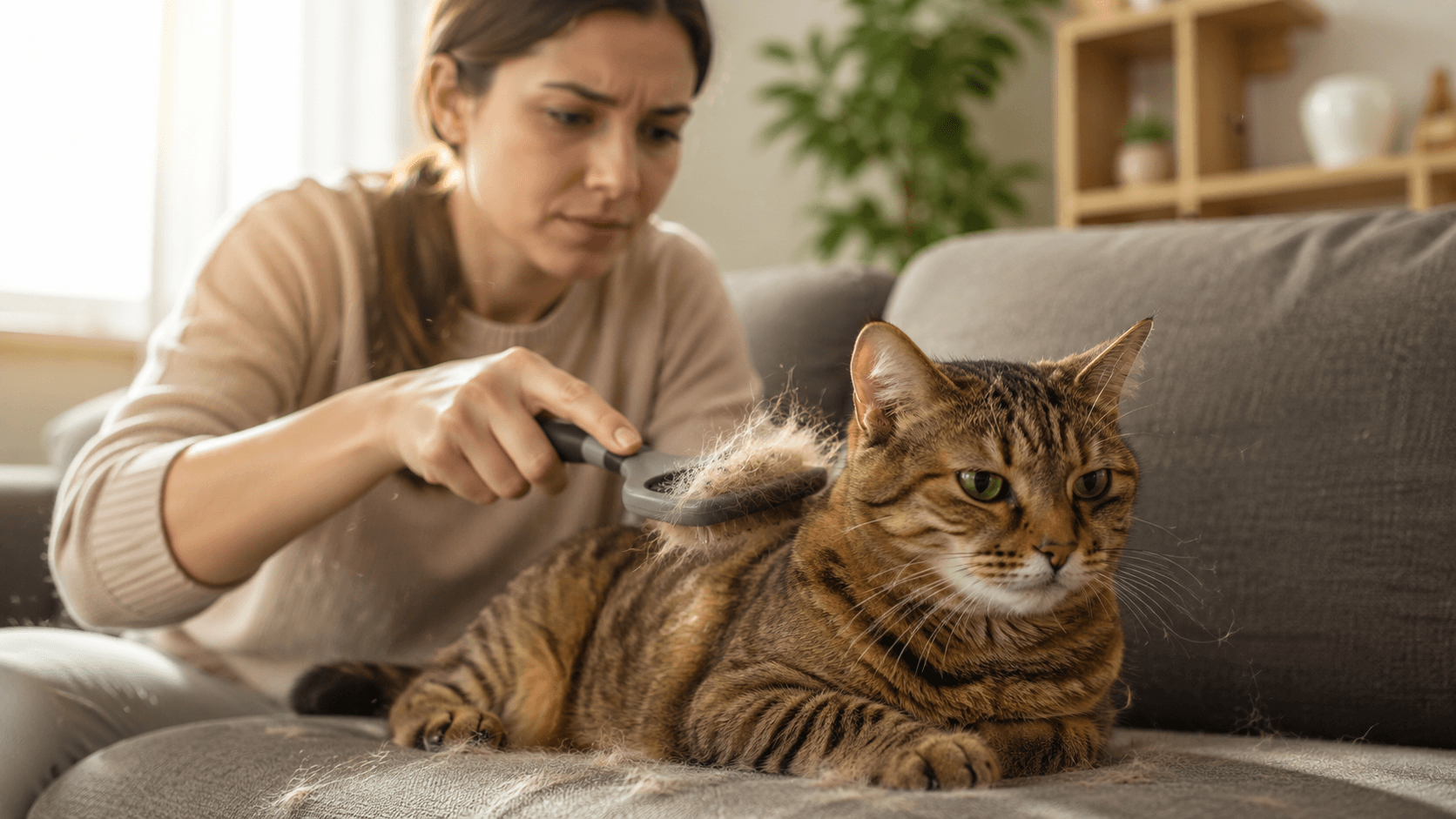
Shedding in cats is a natural process of coat renewal. However, excessive hair loss can sometimes be associated with skin diseases, stress, or metabolic disorders. It is important for owners to understand what constitutes normal shedding and when veterinary evaluation may be necessary.
Why Do Cats Shed?
A cat's coat is constantly renewing itself. The intensity of shedding can be influenced by several factors, including:
- Seasonal changes;
- Temperature and humidity;
- Coat length;
- The animal's age;
- Nutrition;
- Stress levels;
- Overall health status.
Is Year-Round Shedding Normal in Indoor Cats?
Indoor cats may shed more evenly throughout the year due to consistent indoor temperatures and artificial lighting.
A moderate amount of hair loss is generally considered normal if:
A moderate amount of hair loss is generally considered normal if:
- The skin appears healthy;
- There is no itching;
- The coat remains dense and glossy;
- The cat is otherwise healthy and behaving normally.
When Can Hair Loss Indicate a Problem?
Veterinary attention may be warranted if you notice:
- Bald patches;
- Significant itching;
- Skin redness;
- Self-inflicted skin lesions from scratching;
- An unpleasant skin odor;
- A dull coat;
- Excessive grooming;
- A sudden increase in shedding.
Why Does My Cat Groom Excessively During Shedding?
During shedding periods, cats ingest large amounts of hair while grooming themselves. In some cases, this can lead to the formation of hairballs in the stomach.
Signs may include:
Signs may include:
- Vomiting hairballs;
- Coughing or retching-like motions;
- Constipation;
- Decreased appetite.
How Can You Help Your Cat During Shedding?
To reduce loose hair and minimize the risk of hairball formation:
- Brush your cat regularly;
- Provide a complete and balanced diet;
- Ensure adequate water intake;
- Use grooming products only as recommended by a veterinarian;
- Minimize sources of stress.
When Should You Visit a Veterinary Clinic?
A veterinary examination is recommended if:
At the International Veterinary Center MASVET in Bali, we provide diagnostic evaluation of skin and coat disorders in cats, including testing for parasites, allergies, and hormonal abnormalities.
- Areas of hair loss develop;
- The cat is constantly scratching;
- The skin becomes inflamed;
- Hair loss suddenly becomes more severe;
- Vomiting, weight loss, or behavioral changes occur.
At the International Veterinary Center MASVET in Bali, we provide diagnostic evaluation of skin and coat disorders in cats, including testing for parasites, allergies, and hormonal abnormalities.