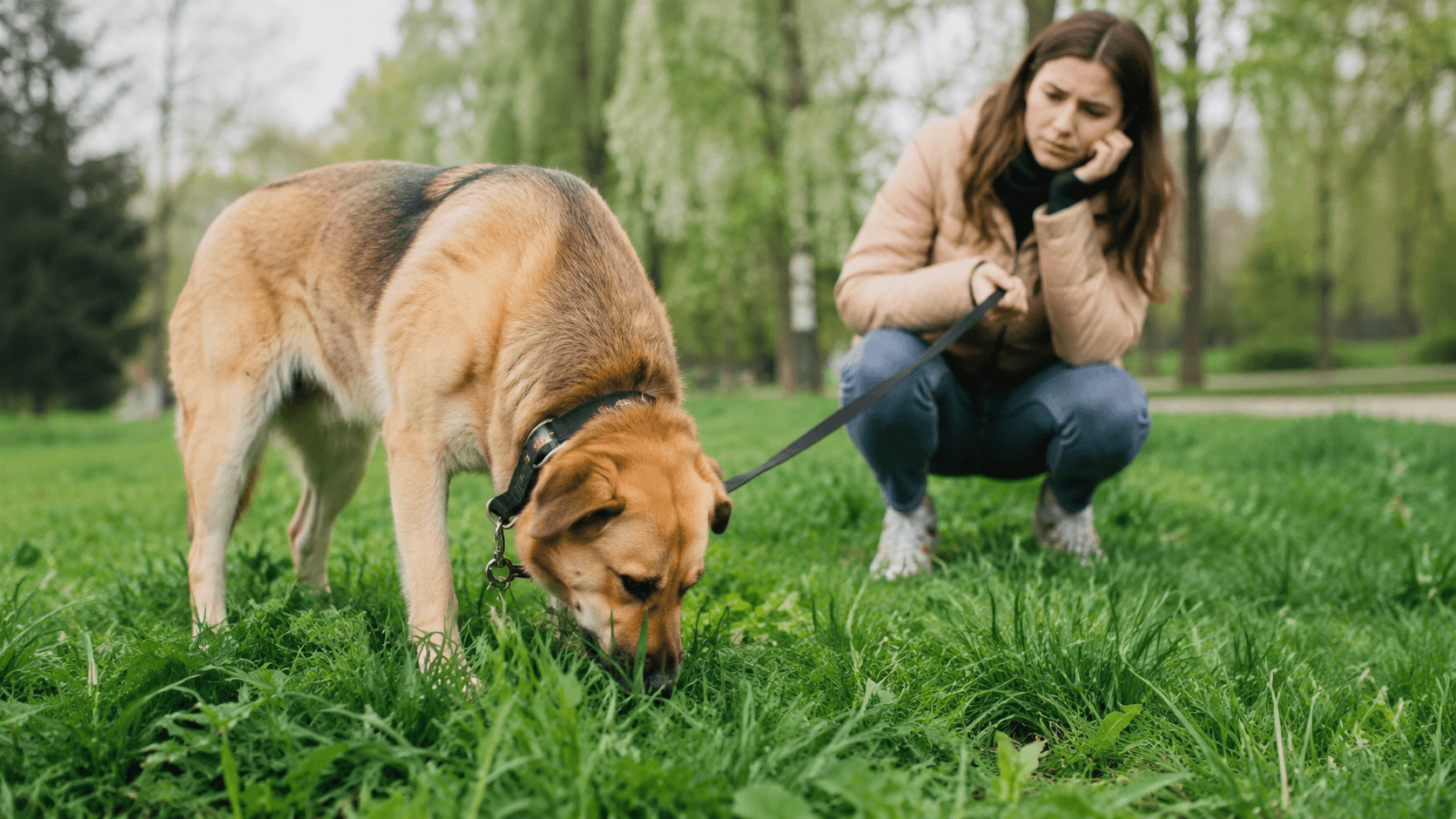
Many owners notice that their dog starts eating grass during walks. In most cases, this is normal behavior and is not associated with any disease. However, in some situations, grass eating may indicate an underlying health issue. Let’s explore why dogs eat grass, when it is considered harmless, and when a veterinary consultation is recommended.
Why Do Dogs Eat Grass?
Dogs may eat grass for a variety of reasons:
- Curiosity;
- Attraction to the taste or texture;
- As part of play and environmental exploration;
- As a component of natural canine behavior.
Is It Normal for a Dog to Eat Grass?
Yes, occasional grass consumption is generally considered normal behavior, especially if:
- The dog is active and energetic;
- Appetite remains normal;
- There is no vomiting or diarrhea;
- No changes in behavior are observed.
Why Does a Dog Eat Grass and Then Vomit?
Grass can sometimes irritate the stomach lining and trigger vomiting. However, it is important to understand that dogs do not necessarily eat grass intentionally to induce vomiting.
If vomiting occurs only occasionally and the dog otherwise feels well, it is not always a cause for concern. However, recurrent or persistent vomiting warrants veterinary evaluation.
If vomiting occurs only occasionally and the dog otherwise feels well, it is not always a cause for concern. However, recurrent or persistent vomiting warrants veterinary evaluation.
Can Grass Eating Indicate a Health Problem?
In some cases, yes—particularly when accompanied by additional symptoms such as:
- Lethargy;
- Loss of appetite;
- Frequent vomiting;
- Diarrhea;
- Abdominal discomfort;
- Sudden behavioral changes.
Is It Dangerous for Dogs to Eat Grass Outdoors?
The primary risk is usually not the grass itself, but the substances that may be present on it. Lawns and green spaces may be treated with:
It is particularly risky to allow dogs to eat grass near roadsides, waste disposal areas, or locations with heavy animal traffic.
- Fertilizers;
- Herbicides;
- Insecticides.
It is particularly risky to allow dogs to eat grass near roadsides, waste disposal areas, or locations with heavy animal traffic.
When Should You Take Your Dog to a Veterinarian?
A veterinary consultation is recommended if:
At the International Veterinary Center MASVET in Bali, we provide comprehensive diagnostics for gastrointestinal disorders, evaluate cases of chronic vomiting, and help identify the underlying causes of behavioral changes in dogs.
- Your dog frequently or compulsively eats grass;
- Vomiting occurs afterward;
- Diarrhea develops;
- The pet is losing weight;
- Weakness, lethargy, or apathy becomes noticeable.
At the International Veterinary Center MASVET in Bali, we provide comprehensive diagnostics for gastrointestinal disorders, evaluate cases of chronic vomiting, and help identify the underlying causes of behavioral changes in dogs.